
Let us begin with something straightforward… what does business mean to you personally?
Business, for me, is a way of giving value to others. I have never treated my activity as an end in itself — there has always been something “beyond.”
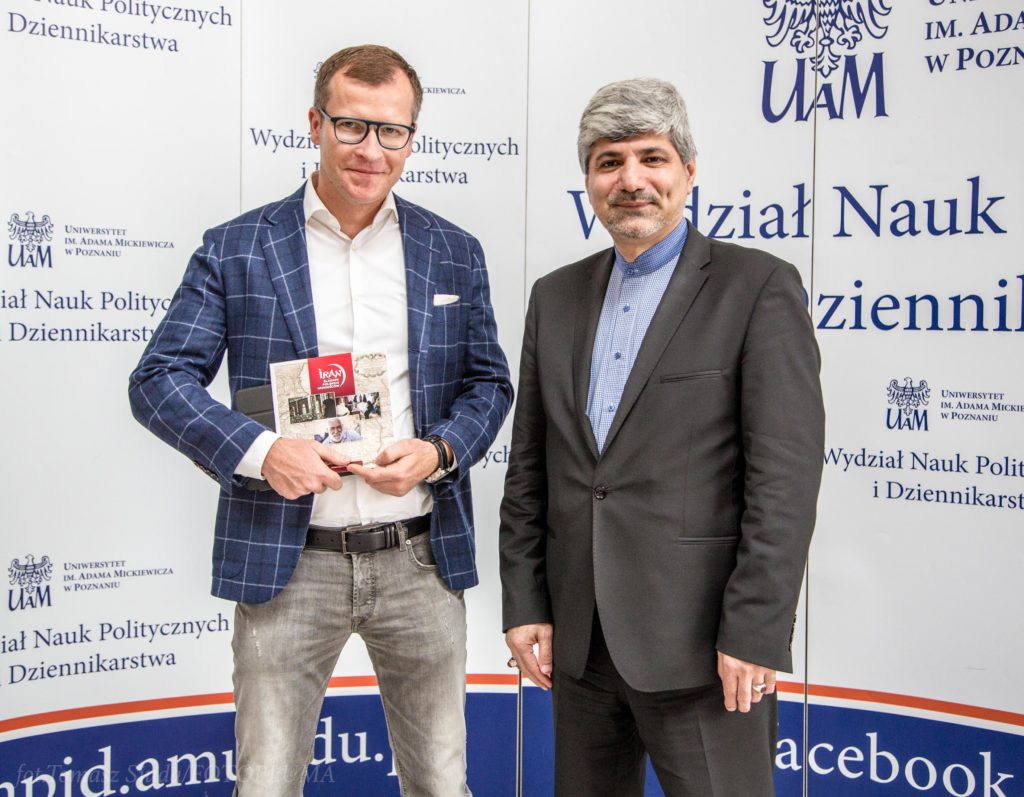
Much is said about the initiative you support: “Iran. In the Footsteps of Polish Refugees.” Why is this subject close to your heart?
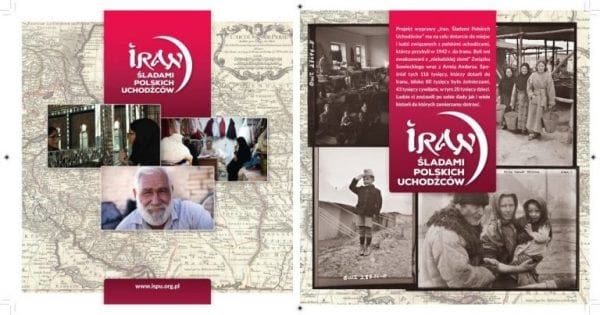
The “Iran. In the Footsteps of Polish Refugees” expedition project holds enormous significance for me. Today, little is said about the fact that from 1942 onwards, over 115,000 Poles were transported by sea from Russian territories to Iran. Approximately 20,000 of that number were children. Most of them were placed in refugee camps, including in Tehran, Ahvaz and Mashhad, where numerous care, educational and cultural facilities were established. No one there forbade the cultivation of faith, the observance of Christian holidays, or the renunciation of one’s own traditions. I feel a sense of gratitude towards this — rather little-known — history, and I am glad that I can repay the Persians by developing their economy, providing them with employment, paying fair wages, acting in their interest, and lobbying for even greater engagement in international cooperation.
What opportunities do you see in cooperation with Iran?
Iran’s economic situation is good, and can be expected to improve further. Economic growth in 2016 reached nearly 4.5%. The macroeconomic forecasts formulated by International Monetary Fund economists for the future are also positive. For 2018 and 2019, growth is projected at 4.1% and 4.2% respectively — these are very optimistic figures.
What constitutes the core domain of Iran’s economy?
Iran’s economy has a highly developed hydrocarbon sector and a well-organised services sector. The Persians possess the world’s second largest natural gas reserves and the fourth largest oil reserves — a tremendous potential that is well worth capitalising on. Other key industries include the textile and chemical industries.
What does trade exchange with Iran look like?
The year 2016 brought a significant revival in trade relations, which translated into a nearly threefold increase in turnover. The most exported products from Poland were semiconductor carriers — specifically “smart cards” — followed by sugar syrups, furniture industry products, grain harvesters, tobacco, pharmaceuticals and shipbuilding industry products.
What will investment and capital cooperation with Iran look like?
I see very great potential in relations with Iran. The most significant areas I would highlight include cooperation in: the extraction and exploitation of deposits sector, educational and research-and-development projects (R&D) and technology transfer. A sector with particularly high growth potential in trade exchange is also the agri-food sector and the market for the supply of machinery and technology for agricultural production and processing. Additionally, I would count on the possibility of greater cooperation in the energy sector and construction chemicals.

What can be expected from GRAN HOLDING in Iran?
Definitely even stronger cooperation in the implementation of existing projects. We also have further investments in the pipeline. I will certainly be able to say more about them soon…